
Part 3: Handheld Set-Up
IfThe you’reMobile usingLPR yourHandheld ownSetup tablet,process pleaseguides followadministrators through configuring Android tablets to successfully communicate with the instructionsLPR directlycamera below.and the PL8RDR network. Its primary purpose is to establish the secure data link required for scanning license plates, processing vehicle data, and issuing violations in the field. This article is intended for OPS-COM administrators and field deployment staff.
Setup and Configuration
This process requires a compatible Android handheld unit and the OPS-COM Parking Enforcement app.
Admin Side: Administrators must ensure the correct network configurations and IP addresses are applied to the handheld device so it can communicate seamlessly with the vehicle's LPR hardware.
User Side: Field officers will connect their devices to the vehicle's local Wi-Fi network and log into the enforcement app to begin scanning plates during their patrol.
If you purchased a fully configured tablet directly from us,OPS-COM, skipthe toenforcement Nextapp Steps.
- pre-installed,
Thethecameraprinterneeds to be configured for 10.42.0.11, which it shouldis alreadybe.paired, Next, you’ll need to enter that IP address in the panel underand the camera IPsettings.is Thepre-configured.handheldYouconnectscan skip the IP configuration steps below and proceed directly to connecting to the PL8RDR network.Configuring the Camera IP (Bring Your Own Device)
If you are using your own Android tablet, you must configure the camera
at thatIPtoaddressestablish the link and transfer data. This is different from the PL8RDR, whichso the handheld can establish a direct data transfer link with the Survision camera.-
Open the OPSCOM Parking Enforcement app on your device.
-
Tap System Settings.
-
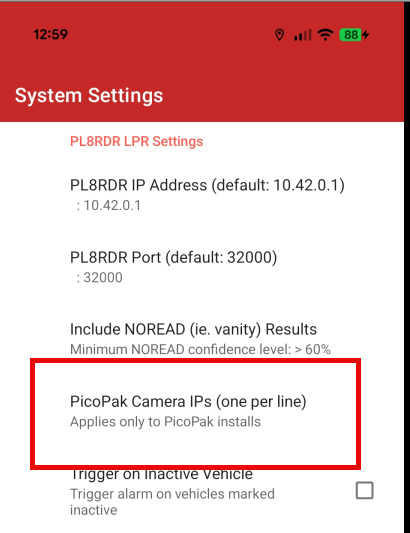
Locate the PicoPak Camera IPs text box.
-
Enter the required IP address 10.42.0.11.

Using this Feature
Field officers and administrators can use the following instructions to connect the handheld device to the vehicle's hardware and test the system's core functionality.
Connecting to the PL8RDR Network
The PL8RDR computer acts as a mobile router, broadcasting a local Wi-Fi network that the handheld device uses to communicate with external systems.
-
Open the Wi-Fi settings menu on your Android device.
-

HereTap isthe wherepl8rdr.opscom younetwork willfrom needthe list of available connections.
Enter the network password T0maha3k.
Tap the Connect button to enterestablish the camera IP:link.
Next Steps
Once your hardware is set up, you'll useAccessing the Enforcement App
-
Tap the OPSCOM Parking Enforcement app
oniconatohandheldlaunchdevice.theThesoftware.app -
already been installed onEnter your
handheldstandarddevice and the printer has also been paired. If your printer wasn't purchased through us,refer to this wiki article.Connecting to the PL8RDR Network:The PL8RDR broadcasts a Wi-Fi network namedpl8rdr.opscom. You'll need to connect your device to this network to scan plates. The password for the network isT0maha3k.App Login:Select the OPSCOM Parking Enforcement app on your device and log in using your OPSCOMOPS-COM admin username and password.
-
YouTap the Login button.
Testing Core Functionalities
Once logged in and connected to the hardware, you are ready to test itthe out!LPR system. The app offers several key features for active enforcement:
-
Searching for Vehicles: You can search for vehicles using three methods:
typingtapping the search field to type the platenumber,number manually, using voicecommand,commands, orusingutilizing the LPR camera with OCRtechnology.
technology for automated scanning. -
E-Chalking (Virtual Chalking): This feature electronically tracks how long a vehicle has been parked. It creates a time-stamped image of the license plate and the entire car, which can be attached directly to a violation.
The chalked image is saved with the violation unless you delete it. -
Issuing Violations: You can issue violations directly to a person or a
vehicle.vehicle profile. The system will automatically perform a secondary check and issue a warning prompt if a scanned plate has a valid permit,butthough it will still allow you to proceed with the violation at your discretion.
Best Practices and Considerations
-
Verify printer pairing: Ensure your Bluetooth printer is properly paired with the tablet before beginning a patrol. If your printer was not purchased through OPS-COM and requires manual setup, refer to the relevant printer setup wiki article for detailed Bluetooth pairing instructions.
-
Manage chalked images: Remember that the e-chalked image is permanently saved with the violation record unless you explicitly delete it. This provides excellent visual evidence for dispute resolution.
-
Monitor connectivity: Ensure the handheld remains connected to the pl8rdr.opscom network during patrols. If the device drops this specific Wi-Fi connection, it will lose the ability to communicate with the LPR hardware.
-
Consult troubleshooting guides: If you
haveexperience anyissuesconnectivity or software issues, refer to thetroubleshootingTroubleshootingguideTips.onDetailedthisstepspage!are available to help resolve common hardware handshakes or app login errors.