
Electronic Fund Transfer Configurations
The Electronic Fund Transfer (EFT) feature allows administrators to export batch payment data into a flat file for external bank processing and subsequently reconcile the returned transaction statuses. Its primary purpose is to seamlessly manage recurring subscriptions or bulk payments directly through your banking institution. This article is intended for OPS-COM administrators.
Setup byand TomahawkConfiguration
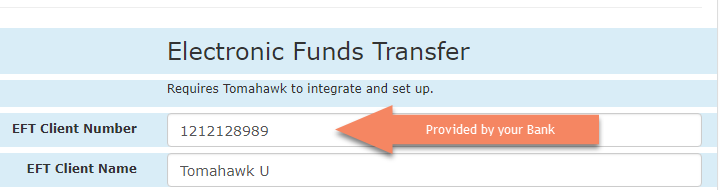
If youyour willorganization beplans usingto use EFT as a payment method, you must provideconfigure Tomahawkyour withspecific bank client number in the client number.system. This identifier is provided by theyour banking institution (e.g., Royal Bank of Canada) and dictates where the funds will be deposited.
Tomahawk Assistance: Depending on your initial onboarding process, the identifierTomahawk theysupport useteam may have already entered this information for you.
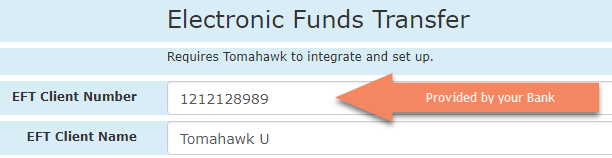
To verify or update this configuration:
-
Hover over System Configuration and click System Settings.
-
Scroll down to
depositlocate the Payments section. -
Enter your bank-provided client number into the appropriate EFT configuration field.
-
Save your system settings.
Using this Feature
The EFT workflow consists of two main administrative phases: generating the export file to send to your account.bank,
Thislater information can be setup underupdating the Paymentssystem sectionbased ofon the Managebank's Systemtransaction Settings page.report.
Creating EFT Files tofor Send to yourthe Bank
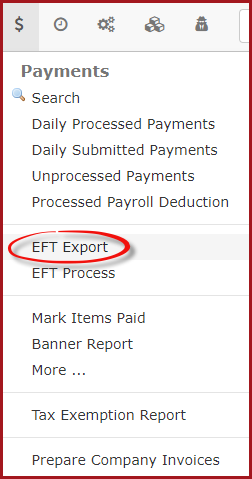
Once theuser subscriptionsubscriptions isare properly set up and you have performed a system rollover, you can exportgenerate the flat file that containscontaining the pending EFT information. This file can be sent to your bank for processing. For details about submitting this to your bank, please contact your representative at the Royal Bank of Canada.
GotoHover over Payments and click EFT Export.
-
Download the
paymentsgeneratedmenuflatandfile.select -
Export.Submit
This will generate thethis fileyou need to sendto your bankinginstitution.
representative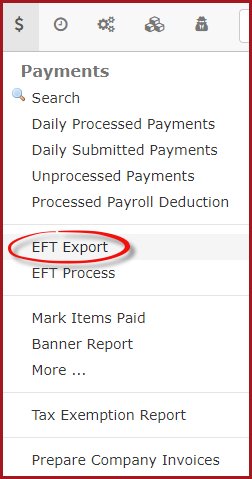
Marking EFT Items as Paid
or Failed
After your bank processes the flat file, they will provide you with a return report detailing which submitted payments were successful and which were declined (e.g., due to insufficient funds). You must manually update these statuses in OPS-COM.
OncetheHover
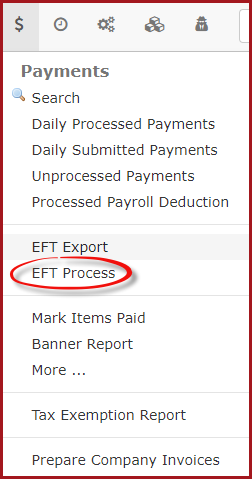
paymentoverhas been processed at the bank, a report will be made available to you by your Banking institution. This report will contain information about what payments you submitted were successful. You can update the OPSCOM systemPayments andmark these as paid or NSF. To do this go to the Payment Menu and selectclick EFTProcess.Process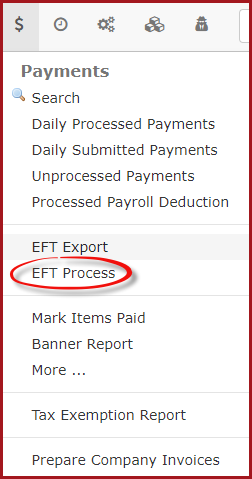
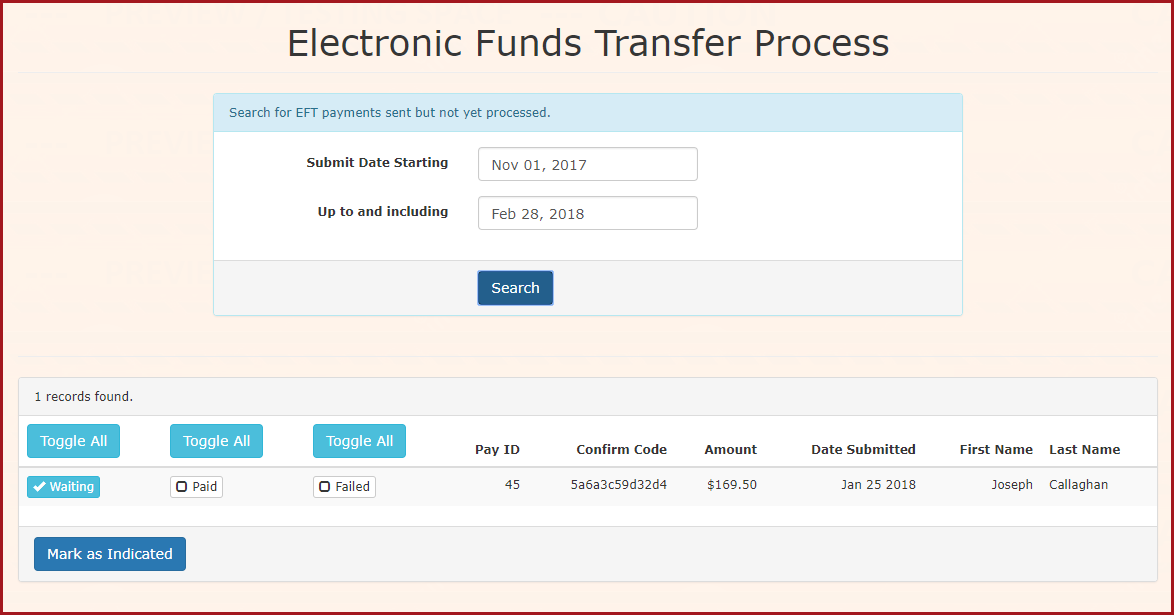
TheReview the list of pending transactions on the Electronic Funds Transfer Process
windowwindow.opens.-
you haveAdjust the
abilitystate for each payment using the available checkboxes. -
Click the Mark as Indicated button to
select three states forfinalize thepayments:
process and update the system records.
-Available WaitingActions -and States:
-
Waiting: This is the default status of
theallpayment.newly exported payments. Ifthea specific payment has not yet been fully processedator confirmed by thebankbank, leave thepaymentrecord inWaiting status.- Paid -Togglethisstatedefaultbywaitingclickingstate.on -
Paid: Enable the
checkbox.checkbox to mark the transaction as successfully processed and deposited. -
Failed: Enable the
-Failed-Select thischeckbox if the paymentfailedwasforreturned,anydeclined,reason.orThisflagged as NSF by the bank. Selecting this action will automatically return the specific item to the user's profile as awaiting payment and archive the failed transaction record.Once you have completed this process clickMark as Indicatedto finalize the process.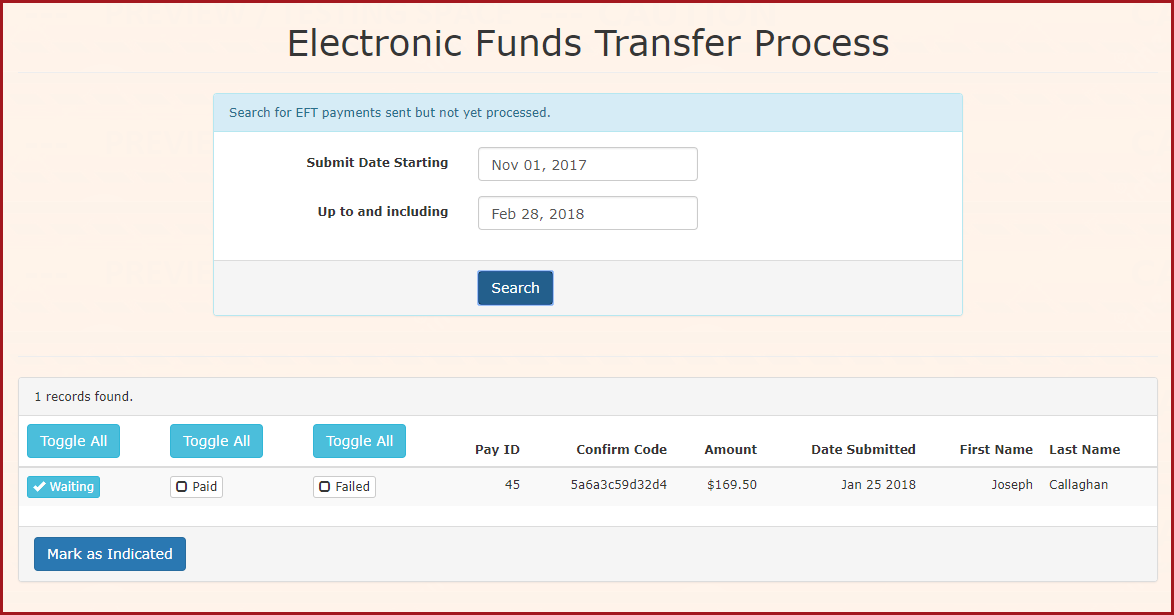
Best Practices and Considerations
-
Prompt Reconciliation: Always process your bank's return report in OPS-COM immediately after receiving it. Delaying the EFT reconciliation process can result in users continuing to hold active permits despite having failed payments on their accounts.
-
Bank Compatibility: The standard flat file generated by the EFT Export tool is specifically formatted to align with the Royal Bank of Canada (RBC). If you are using a different banking institution, please contact support@ops-com.com to confirm compatibility or discuss custom formatting options.