
Security PIN on Violations - How is it used
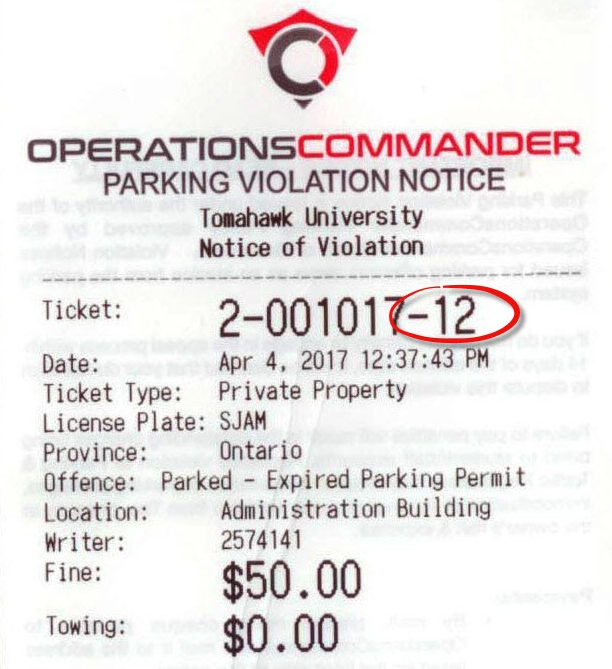
The Security PIN on Violations feature appends a randomized, two-character code to the end of a printed parking ticket to act as a secure access password. Its primary purpose is to allow unregistered guest users to safely look up, pay, or appeal their citations online while preventing malicious users from searching sequential ticket numbers to view other people's data. This article is intended for OPSCOM administrators.
Setup and Configuration
By default, the system is configured to generate a random PIN on newly issued tickets. Administrators can disable or re-enable this feature directly within the core system settings.
-
Hover over System Config and click System Settings.
-
Click Violations to open the specific violation settings menu.
-
Disable the Include Random PIN on Handheld Tickets checkbox to stop generating PINs on newly printed tickets, or enable it to turn the feature on.
-
Save your configuration changes.
Using this Feature
The ticket PIN primarily impacts how unregistered users access their violations on the public-facing portal. It's the additional dash and two digits at the end of a violations ticket (e.g., the -8T in TT-10016-8T) and is only used as a password for the ticket when appealing it.
Guest User Access
Once authenticated, the user will be presented with a secure screen allowing them to pay or appeal the ticket. The retrieved ticket record will automatically drop the PIN from the visual display once the user is inside the payment portal.
Administrator Search Access
When an administrator searches for a violation internally via the system search tools, the PIN is not strictly required. Searching for the core ticket number (e.g., TT-10016) will successfully return the violation. Searching for the full string including the PIN (e.g., TT-10016-8T) will also return the exact same ticket record.
Best Practices and Considerations
Reporting and Mailouts: The Security PIN is only utilized for initial online lookup validation. It is intentionally excluded from backend data exports. Automated FTP reports, internal data exports, and physical mailed notice letters will exclusively display the core ticket number (e.g., TT-10016) without the appended PIN.
-
Security Awareness: Keep the PIN feature enabled if you allow guest payments or guest appeals. Disabling the PIN removes the password protection layer, potentially allowing individuals to type in sequential ticket numbers and view citation details that do not belong to them.